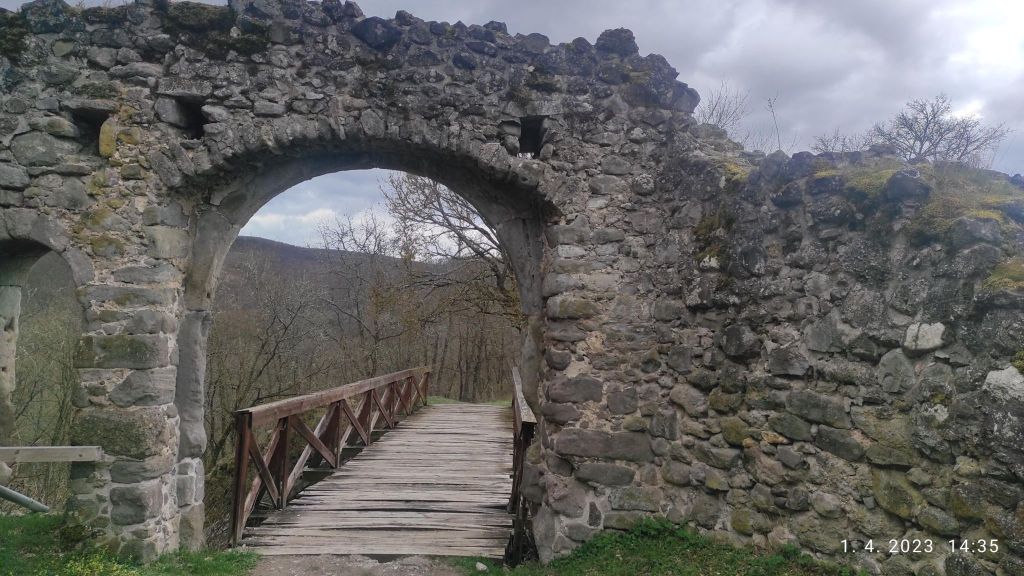
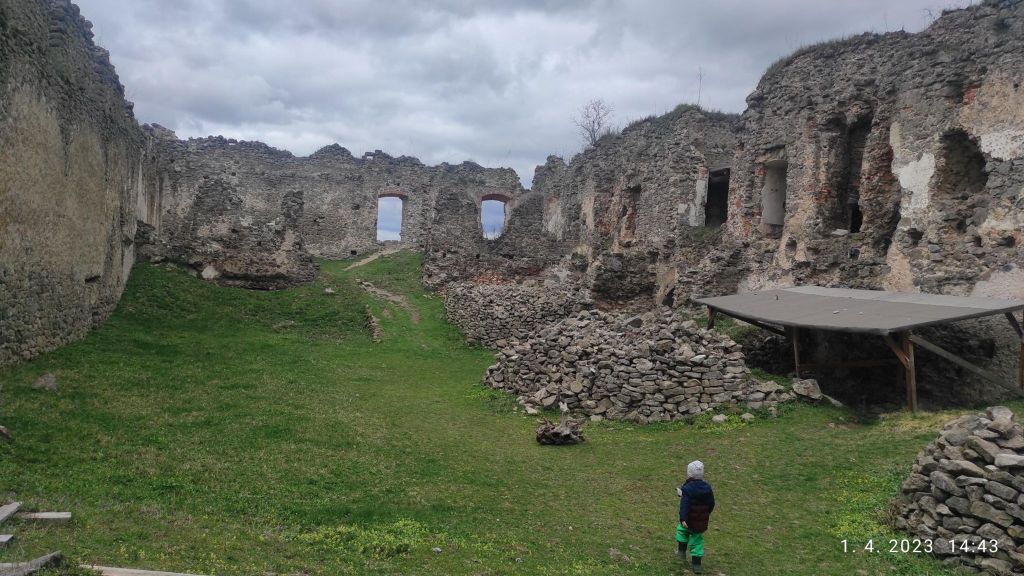
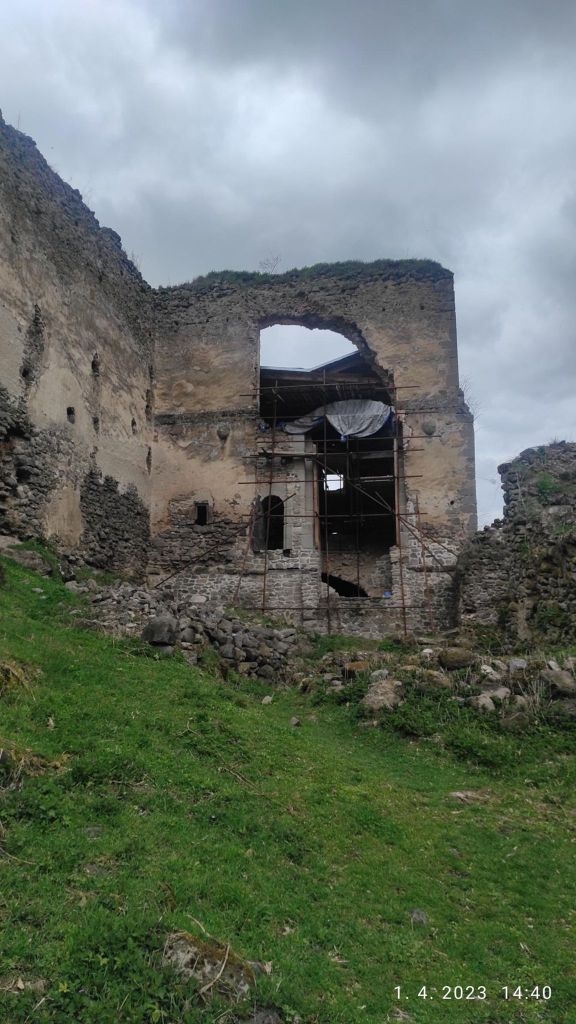
Čabraď or Litava is a castle ruin located near the village of Čabradský Vrbovok in the middle of the Krupinská plain on a hill above the Litava valley. Originally, this castle was called Litava.
It was built in the 13th century and the first written mention dates back to 1276. It belongs to a group of Central Slovak castles, the purpose of which was to protect the roads leading to the mining towns. In the second half of the 16th century, it was an important anti-Turkish fortress and the Turks tried in vain to conquer it several times. Its medieval core consisted of a central tower protected by four bastions and a castle palace, which stood above a well-controlled curved entrance to the upper courtyard. The last reconstructions in the 17th century transformed the inner castle into a comfortable manor house. When the Kohári family moved to a newly built, luxurious house in Svätý Anton in the 18th century, the importance of the castle rapidly declined. The decline was accelerated by the fact that the owners themselves had it set on fire in 1812 to prevent the castle from being occupied by marauding knights. The castle also includes a granary, which was added to the castle grounds in the 19th century. In the last drawings from the 19th century, it can still be seen as a functional building, but today, together with the castle, they are already ruins.
David was 3 years old at that time.