-
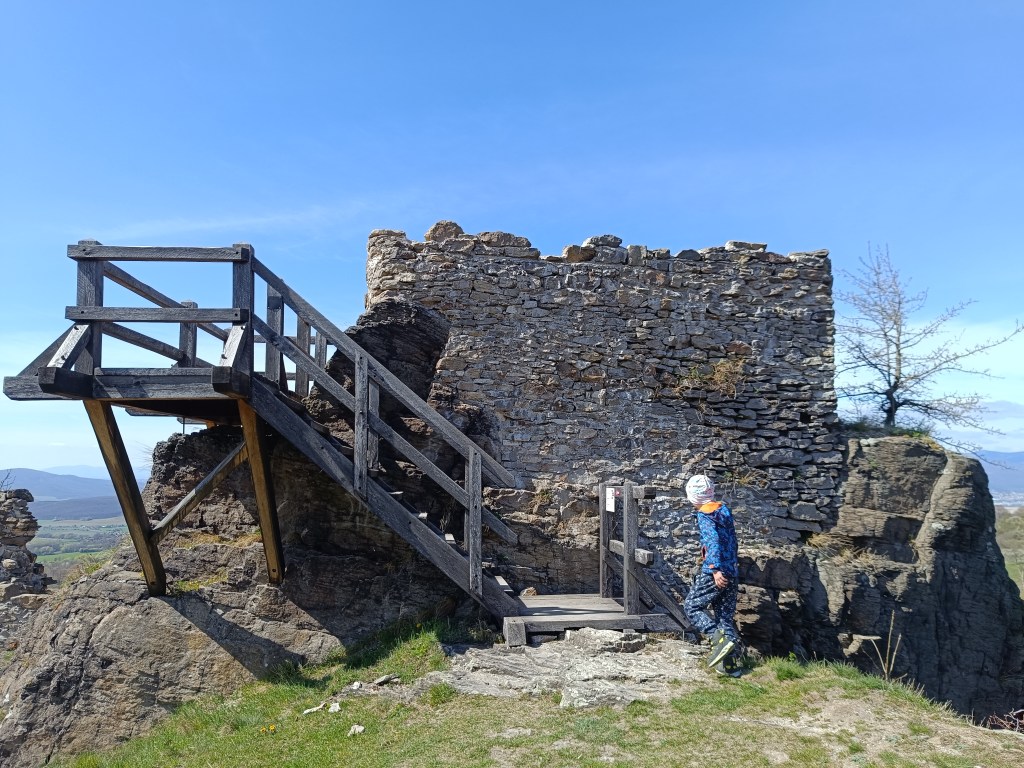
Sivý kameň Castle, Končita
The ruins of the Sivý kameň Castle are located on an andesite cliff above the village of Podhradie near Prievidza. Although relatively little of the castle has survived to this day, the castle cliff provides a beautiful view of the surrounding landscape.
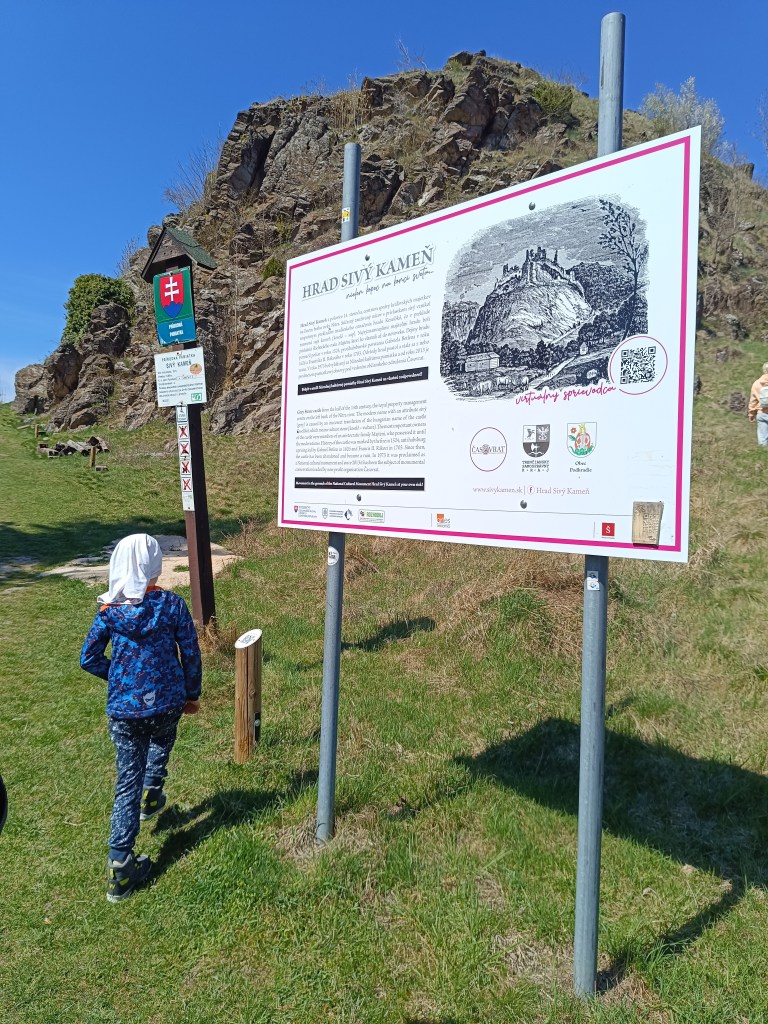
Under the castle The remains of the castle from the mid-14th century are visible directly from the village. A short climb from the village center will soon take you to a dirt road. Here, a sign with the inscription Sivý Kameň will alert you to the right direction. The entire climb to the castle takes approximately 15 minutes.
Nowadays, when visiting the castle, we can observe its small remains, which at least indicate its size and the remains of the masonry. From the inner Gothic castle, the perimeter walls of the prismatic tower have been preserved.
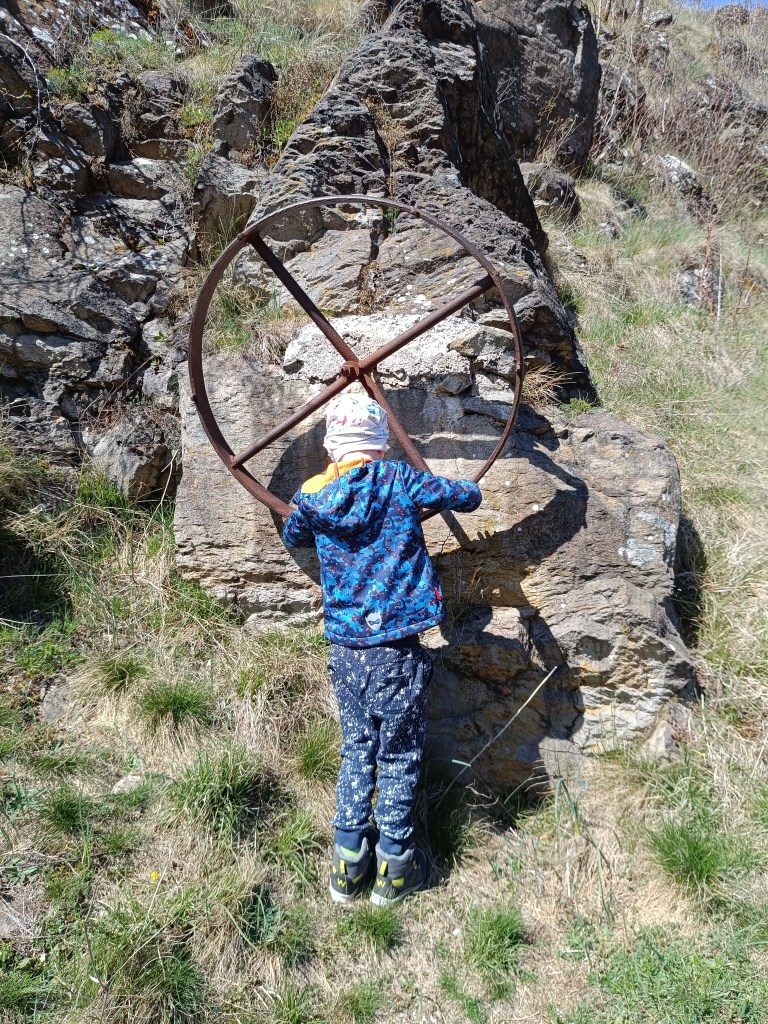
Andessite cliff, on which the castle is build One of the few remains of the castle The Sivý Kameň Castle was built shortly before 1350 as a royal castle. The construction of the castle was necessitated by the circumstances that arose after the death of Matúš Čák in 1321. Since there was no other castle in the vicinity besides Bojnice Castle, the need arose to build another administrative center.
Later the castle belonged to different families. In 1430 both castles reverted to the crown. In 1431 the king donated the castle of Sivý Kameň to Gregor Majthényi and his heirs. Since then the castle and the estate have remained in permanent possession of the Majthényi family.
The castle began to decline in the late 16th and early 17th centuries. In 1626, Gabriel Bethlen’s rebels attacked the castle and other Majthényi properties and thoroughly plundered them.
The first decade of the 18th century brought further attacks on the castle, this time by Rákoczi’s soldiers. Soon the important estate became a ruin. The remains of the castle were subsequently dismantled by the inhabitants of Podhradie.
Končitá
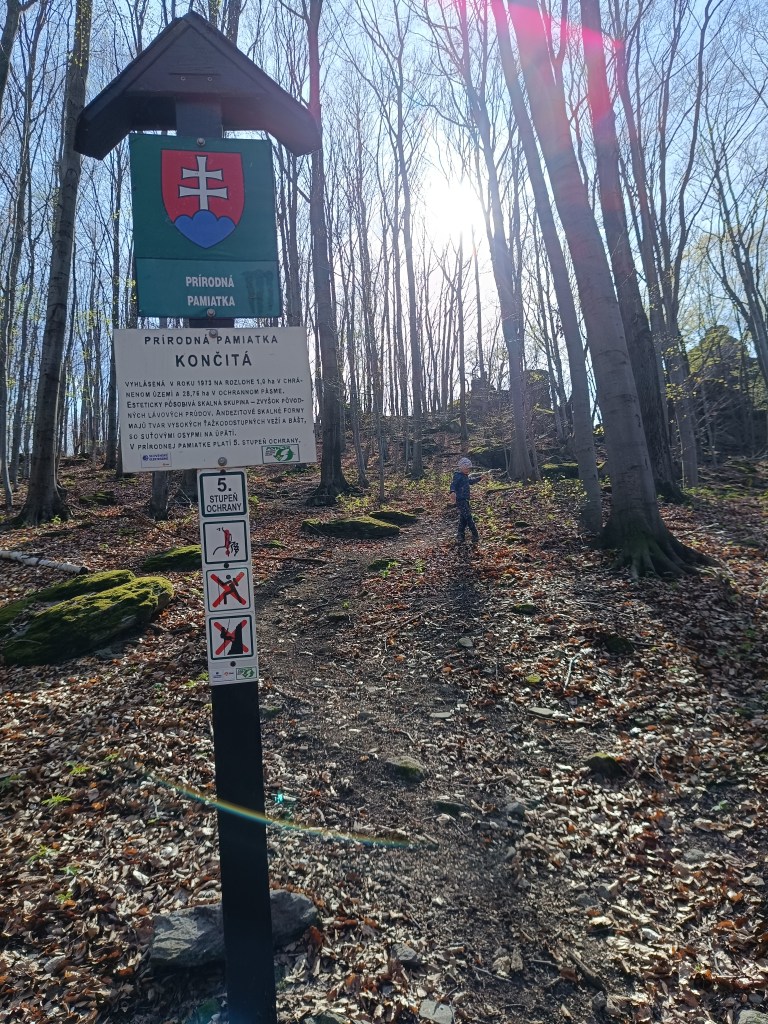
Natural monument končitá From the cottage below Končita, in Gebňárova Valley, which we can reach from the village of Kamenec pod Vtáčnikom, an unmarked trail leads to the peak cliffs of Končita.
Behind the stream rise the rock formations of Končita, to which a well-trodden path leads. Končita was declared a Natural Monument in 1973.
In the vicinity there are smaller and larger rockeries covered with deep green moss. The Končitaj cliffs are dominated by a 30-meter-high andesite tower. From Končita, following the ridge to the left, we come to the Devil’s Paths. There are huge boulders also covered with green moss, rocky cliffs, windows and narrow gorges.
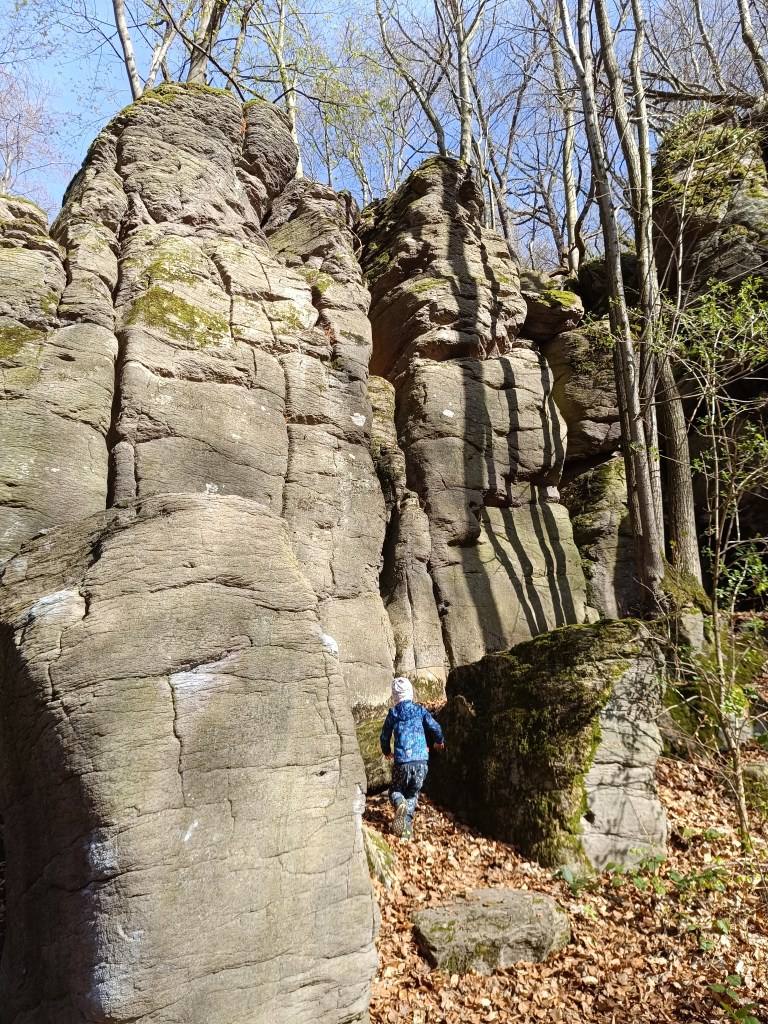
Devil’s Paths 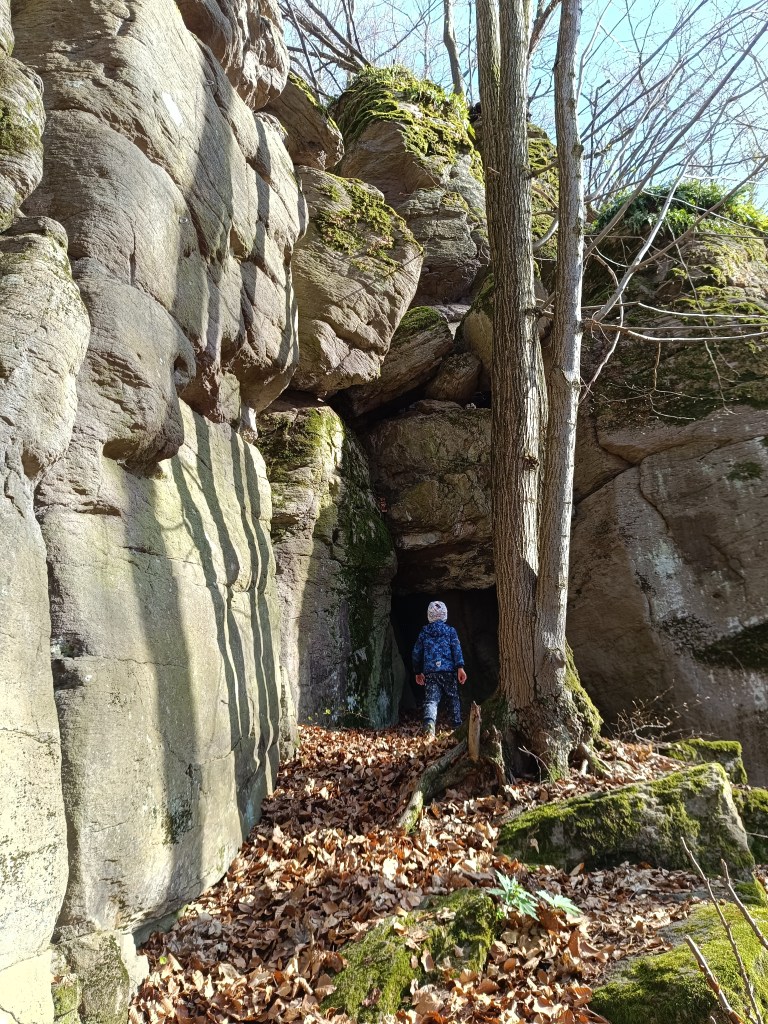
a cave in the stone -
Bzovík
It is originally a Benedictine (later Premonstratensian) monastery rebuilt into a fortress (castle), near the village of Bzovík.
The monastery in Bzovík was founded in the first half of the 12th century. The Benedictines were replaced sometime between 1179 and 1181 by the Premonstratensians from Olomouc, who spread spiritual culture and education, but also new economic knowledge and new methods of tilling the land.
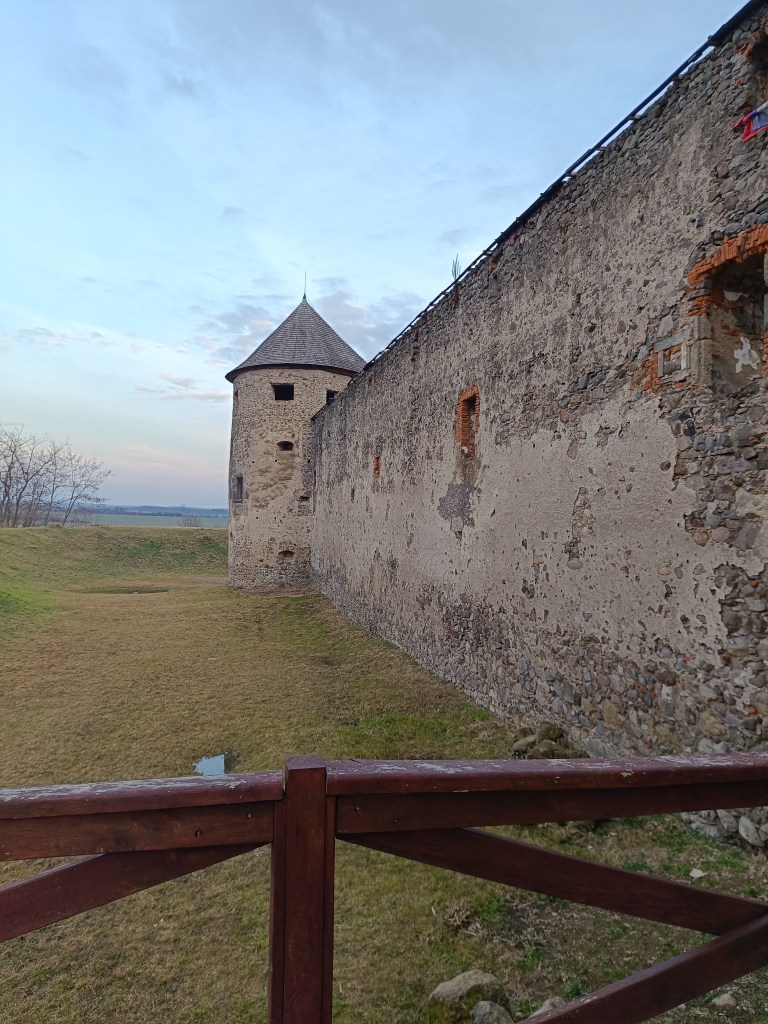
Outside walls The Romanesque double-towered church, to which a monastery building with a paradise courtyard and a cloister was later added after renovations, was one of our most important Romanesque architectural monuments. The church and monastery were often the target of attacks during the 15th century; the building burned down several times, after which it was immediately repaired and partially rebuilt.
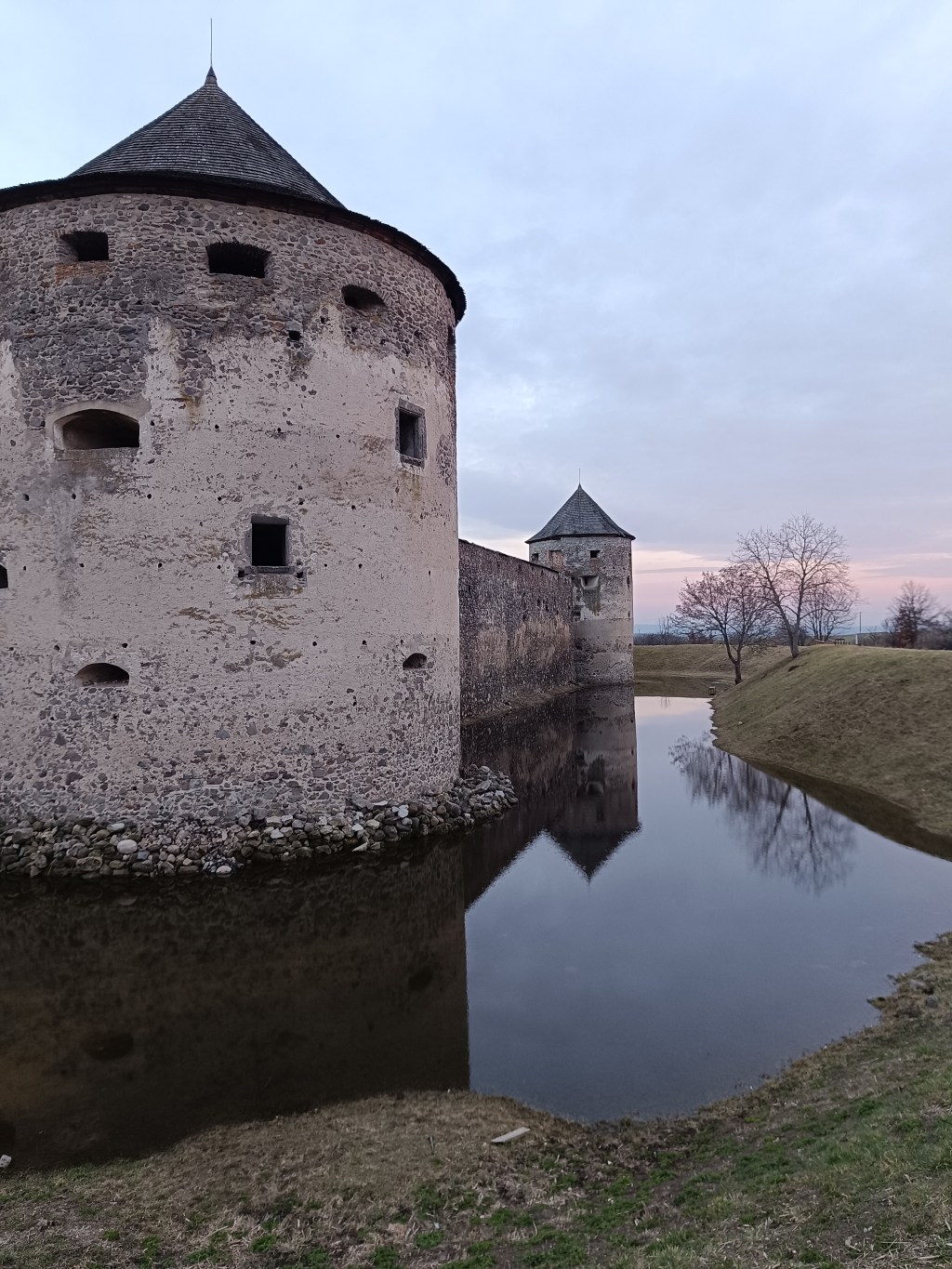
Sigismund Balaša expelled the monks from the monastery around 1530 and immediately began rebuilding the monastery into a manor house surrounded by massive fortifications. The walls were given massive shooting range and internal galleries. Dwellings for soldiers and farm buildings were added to them from the inside. The entire area was protected by wide moats and massive corner bastions.
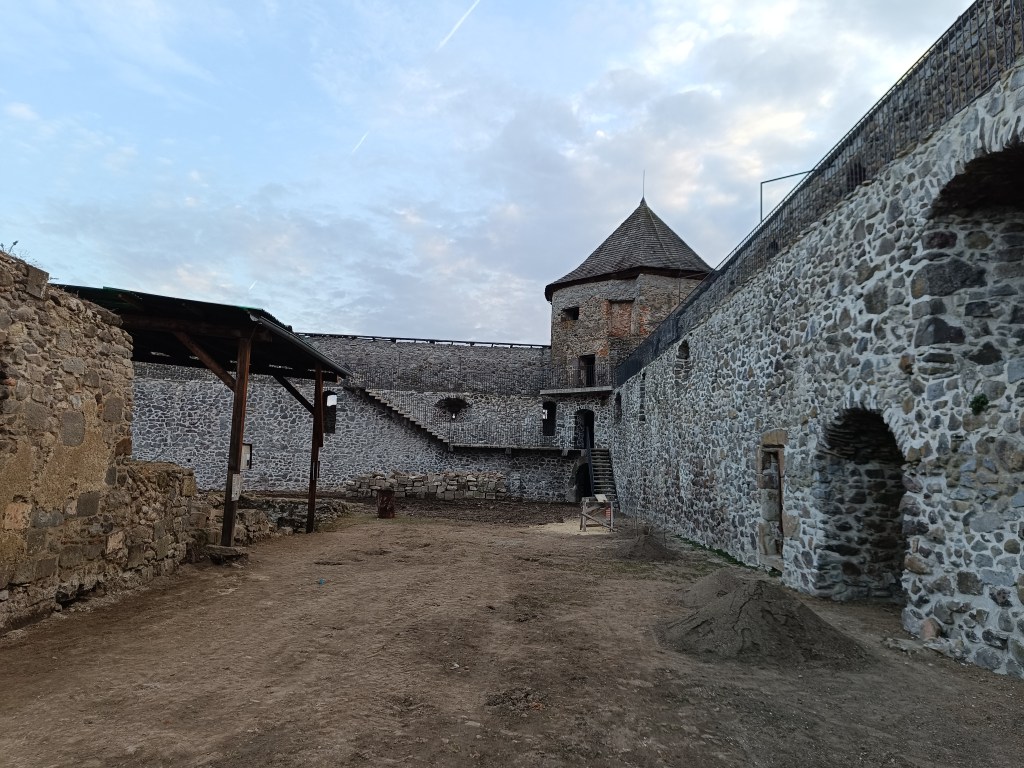
Object is in reconstruction In 1620 the monastery burned down, but at the end of the 17th century it was returned to the church. In 1678 it was conquered by the rebels of Imrich Tököli.
The next period was already approaching its demise. After a short ownership by the Jesuit order and the Archbishop of Esztergom, the building began to fall into disrepair at the beginning of the 19th century. The final blow in the process of decay was dealt to it by the fighting during World War II and the subsequent destruction by the local population.
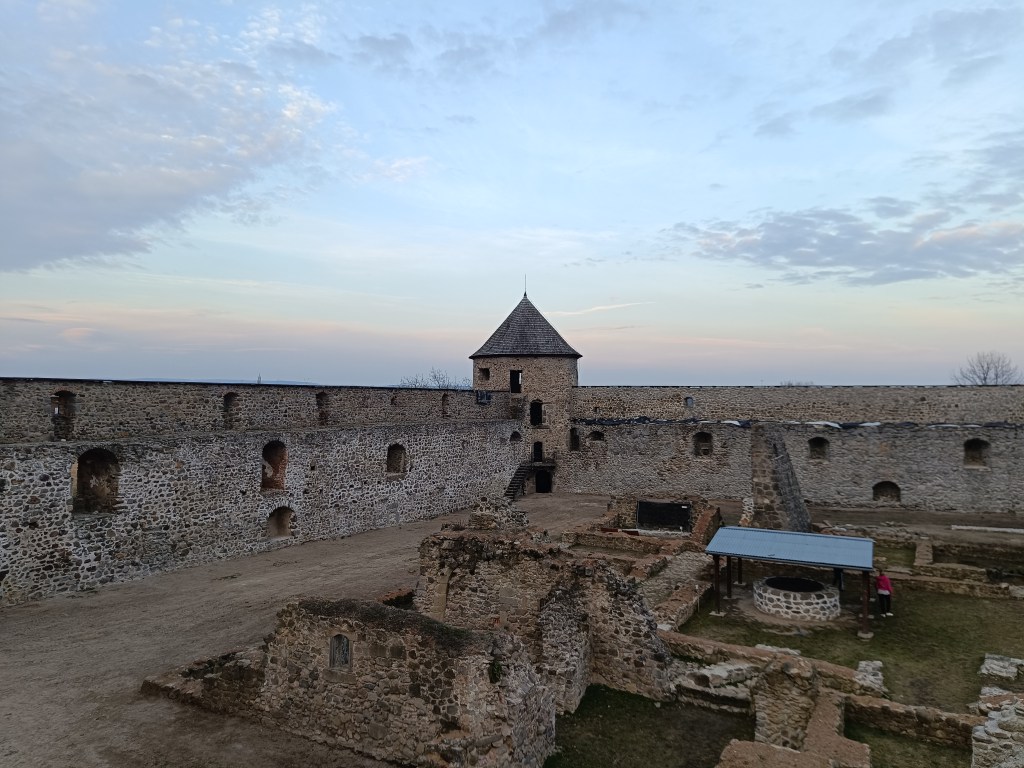
The outer walls are better preserved than the inner structures. The former monastery complex is in ruins, except for the outer fortifications, which show signs of preservation and reconstruction. You can park right next to the building.
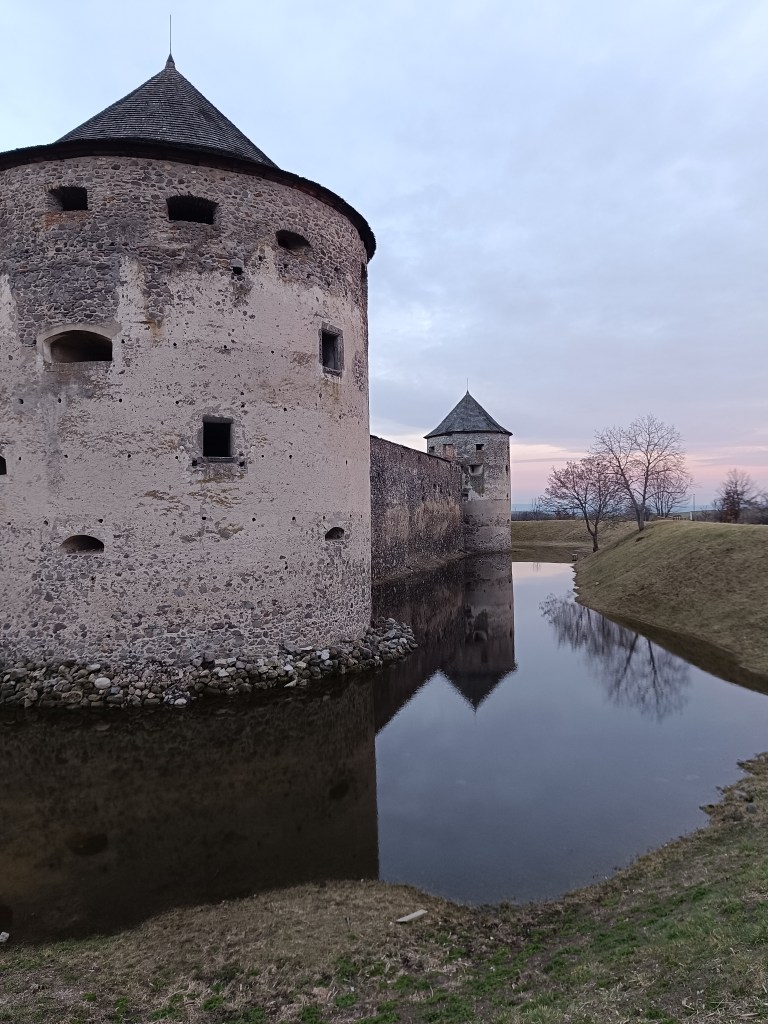
Moat with water in it
-
Subscribe
Subscribed
Have a WordPress.com account? Log in now.

